I've been replying to threads in the permaculture disscussion group on Facebook, and decided to re-post some of them here.
Annual vegetables needn't be grown in rows of identical plants. Giant farms do it because their tractors like straight lines and it makes harvesting faster to have one crop all together. But in a yard, the extension of your home, aesthetics should matter, and when you create a beautiful space you want to live in, you'll give your garden way more of your time and attention, I promise. It's beneficial to have different things growing next to each other, with flowers for attracting beneficial insects throughout the whole space. The most direct competition for resources comes from the same species of plants growing next to each other. A row of the same plant also makes it easy for bugs who like that plant to find one and then the rest of them down the line. If you think of the (perennial and annual) vegetables as landscaping plants you can eat, you'll create a much more beautiful space than the rows of a basic (rather uncreative) back yard garden. Looking at the architecture of each plant can help you create clumps or groupings of things with different heights and shapes. You can use the shade of something that likes full sun (like tomatoes) to shelter a smaller something that doesn't mind some shade during the hot times of the year (like lettuce or basil). Also, rows maximize pathway area, and in a small space you want to have as much square footage devoted to food as possible. Key hole beds and mandala gardens offer shapes that maximize planting area while ensuring that you can easily reach the plants.
Some species need at least one other sister plant near them for pollination (and therefore fruiting) to take place, but most of the time back yards are small enough that it isn't an issue for the other tomato or whatever to be several yards away. A few plants, corn for instance, need to be in a closely planted group of themselves for adequate pollination, but I personally don't think corn is the best crop for a small scale garden -seems to do better the more numbers there are. We tried the native american method of growing corn, beans, and squash in one patch, and honestly I think it made harvesting each of those things at the end of the summer way more of a hassle. The idea is that the squash is the ground cover for shading out weeds, and the corn provides the trellis for the beans, which provide nitrogen for the corn and the squash. This is an example of "over-yielding polycultures", what permaculturists strive to create in their gardens: combinations of plants that benefit each other, creating situations where they can yield more than if they were grown all alone.
If your yard is at all sloped, it's in your very best interests to think about how water runs down hill when you're planning where to put beds. You may need to create low earth mounds on the down slope side of the bed to prevent the water from just flowing away.
this link talks about polyculture plantings in a mandala shape:
http://www.permaculture.org/nm/index.php/site/Permaculture-Mandala-Garden/
and this one has nice drawings of key hole bed set up:
http://www.the-gardeners-calendar.co.uk/tgc2009/news/story.asp?nid=2414
December 14, 2009

December 3, 2009
How to Hang a Sign In a Tree

 and a view of our gate, which I think is rather picturesque.
I've seen many many signs nailed directly to trees, and it always makes me sad. Firstly, driving a couple rusty stakes into a tree trunk usually eventually results in damage and probable death of the tree. As the tree swells and grows around the nail, it doesn't take too long to pop the sign right off the tree, leaving a few nails and an ugly scar.
We made some signs to hang up around the property, the obligitory "stay out" signage I guess, and hung them up down at the front gate yesterday. I made stencils with hand drawn font, and used water base enamel paint on some recycled galvanized sheet metal for the final sign. We screwed the metal to pieces of cedar and used hardware to attach chains to the wood. Looping one chain around a branch and another around the trunk securely attached the sign. Some moss will be scraped off where the chain rubs but there are no punctures or girdles to the trunk. We'll have to loosen the chain around the trunk in a few decades. This is a mature ash tree, a slow growing hardwood that likes creek bottom areas. We're not sure of the specific variety of ash, I'll get back to you when we're better at that kind of thing.
My Review of Loose Tights II
Originally submitted at Ibexwear
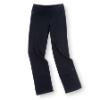
There's a reason our tights are great sellers, year in and year out. And that reason is our Energy fabric. It's made of New Zealand Merino, naturally, here in a winter weight. But it also has a touch of nylon and Lycra - around the office we call it stretch wool. This is fabric that moves w...
love them! but my body is special...
By fishermansdaughter from big bend, ca on 12/3/2009
Fit: Feels true to size
Pros: Warm, Comfortable, Breathable, Allows Free Movement, Durable
Cons: Too Long, Fabric Shrinks
Best Uses: Yoga, Sports, Cold Weather, Running, Gym, Casual Wear
Describe Yourself: Frequent Exerciser
I am usually a very solid "medium" when it comes to anything below the waist. However, I have a really small waist in relation to hips (28-39), plus a pretty short inseam, and am at this point in womanhood very accustomed to altering clothes to fit me more perfectly. The pattern design of these pants is superb - no side seams make the heavy-ish fabric work well - they're not at all bulky or uncomfortable. I am, after washing them and drying them on "hot" in an effort to shrink them (it worked but not quite enough), finally working up the courage to cut them apart and take up the top of the back seam a bit, so that the band rides at my natural waist. But this is not to be taken a criticism of these pants in general. Like I said, I done this before, and it's because I'm (apparently) not shaped like many other people. I bought them for yoga in cold rooms, but I've been wearing them waaaay more than I thought I would. You can go out in public in them and not look like you're in your jammies, but feel like you're in your jammies, maybe even still in bed. Great buy!
(legalese)
November 30, 2009
Veganism is not the solution

I posted a version of this (ok, let's call it what it is) rant on facebook in response to someone else's response to an op-ed article in the times, entitled "Animal, Vegetable, Miserable" by philosophy professor Gary Steiner.
http://www.nytimes.com/2009/11/22/opinion/22steiner.html?_r=1
I know it's not fair to just quote a sentence (I encourage you to at least quickly read the article), but this sums it up for me:
"The simple answer is that most people just don’t care about the lives or fortunes of animals. If they did care, they would learn as much as possible about the ways in which our society systematically abuses animals, and they would make what is at once a very simple and a very difficult choice: to forswear the consumption of animal products of all kinds."
He then goes on to say that being a 'pure' vegan is very difficult our in "meat-crazed" society (his word, but I can't say I disagree). Perhaps the difficulty lies in repressing the instincts of the most successful predator the earth has ever seen. I also don't disagree with his philosophical argument for respecting the sentient lives of all creatures, but I think that it is an incomplete view of what and how we feed ourselves. He ignores some basic biological facts that pertain to our place in the large and wonderful ecosystem of Gaia. I see veganism and its motivating guilt as a symptom of our industrialized system of feeding ourselves, not a solution to it. Steiner insinuates that to eat a vegan diet means you are concerned with the origins of your food, but many vegan food products (I'm mostly thinking of fats and proteins) do not take into account the seasonality or local availability of a given plant. It's deemed "good for the earth" simply because it's free of animal products, but is something that grew in a climate far from our abode, processed to the point of being unrecognizable, preserved with chemicals, and/or covered in several layers of disposable packaging really something to be proud to eat? Our complicated food environment requires more nuanced criteria than the black and white of an animal-free diet. The mere fact that bacon bits are considered 'safe' for ANYONE to eat (but - they're vegan!) frightens me. And that mango-avocado-banana-cacao smoothie a New Yorker can enjoy drinking even in the cold months of the year? Fashionable, vegan, and tasty, for sure, but possible only due to energy intensive transportation and refrigeration systems, not to mention the thankless labor of many third world people. Oh, and that banana plantation probably replaced what was pricelessly biologically diverse rainforest. How's that for a guilt trip?
Many of the arguments for the alleged superior health of a vegan diet are based in the decisions the FDA pronounced as nutritional law in the 1970s after hard corporate lobbying to demonize saturated fats. Their goal was to sell more of their soy and corn based products (the cheapest and most available food sources, thanks to subsidies). New science has shown that saturated animal fats are not the cause of heart disease or obesity, and that encouraging the American public to base their diet on these two mass produced grains has lead to our myriad of societal health problems. Traditional diets always include animal products, because animals are amazing resources of the one thing we crave the most: fat. When we don't eat enough fat, we often try to fill the void with the second most nutritionally dense food: sugar. The so-called "French paradox" (how to they get to eat all that cream and still be skinny?!?!) makes sense when you realize that a person whose diet is rich in nutritionally and calorically dense foods is going to feel psychologically and physiologically satisfied, and less likely to munch away on empty carbohydrates. (If this makes you wonder about my sanity, check out Sally Fallon's book "Nourishing Traditions" and prepare to have everything you thought you knew about food and health turned on its head.)
Yes, the industrialized production of cows, pigs, chickens, and turkeys is disgusting. The monoculture of genetically altered grains grown with synthetic encouragement is equally forced and unnatural. The methods of industrialized production are only one way (unfortunately an appallingly common way) to bring and take the life of an animal for the sake of human food, and I simply can't bring myself to buy the idea that humans aren't supposed to eat animals. Women lose and therefore need to ingest too much iron to be totally reliant on plants (show me a vegan woman and 99.9% of the time I'll show you a case of anemia), and meat is the most available source of it for our digestive tract. Vegetable forms aren't at all as readily absorbed - a very interesting book on the subject of human evolution, which discusses our dependence on iron, is Sex, Time, and Power by Leonard Shlain. Cows evolved a digestive tract capable of turning grass into iron rich protein, and that is something that sheer human will power will never accomplish.
What compassionate, intelligent humans do is study patterns in nature to learn how we can live on this earth without depleting its resources. Grazing animals generally range over a large area, and are never forced to take a second taste from grass that hasn't had the opportunity to grow back after the initial bite. Industrial cattle aren't fed grass at all, are forced to attempt to digest the same genetically altered grains that are making the rest of the US population very sick. Apparently the cow's digestive tract hasn't evolved fast enough to digest the high sugar content of corn, and cattle fed this diet have to be fed anti-biotics just to live long enough for slaughter. But are these facts alone enough to say that eating beef is immoral? Grasslands that are responsibly grazed sequester carbon, and essentially create beef from the energy of the sun. Joel Salatin calls this "Salad Bar Beef" and he's written a book by the same name, describing how intentional rotations of grazing areas dynamically improve the health and fertility of the land. The "beyond organic" farm that the Salatin family operates, Polyface, is a beautiful example of a reasonable and humane way for people to raise animals for human consumption. Their website: http://www.polyfacefarms.com/
The amount of life that exists on a microscopic level in the soil is mind boggling. Billions of tiny creatures exist in every tablespoon of healthy soil. Annual crops, like soybeans, require that the soil be tilled every year, even multiple times a year for the process of planting and harvesting to take place. The mass murder of these soil micro-organisms as their whole world is flipped upside down could probably be written off by vegans as acceptable because they are "non-sentient" lifeforms. But these life forms make ALL OTHER LIFE POSSIBLE. Without them, no trees could grow and produce fruit, no grass could create their seed heads, no bean could create a nitrogen rich environment in its wake. The only way to foster these very important parts of our planet is to leave the soil alone as much as possible. Planting long term crops in a mixture of species, in the form of food forests and grasslands, mimics the way nature has fed her animals since animals had more than one cell. With this knowledge, would you rather have a glass of raw milk from a cow grazing on perennial grasses, or a glass of factory created soy juice? I can tell you which one would win a taste test....
Steiner complains that there are few people willing to make the commitment to eliminate animal products from their lives, because the world is saturated with them. I find it telling that all the vegans I've ever met are city dwellers who have little to nothing to do with the production of their food. With organic methods, the most reasonable way to increase fertility is to incorporate animal poop in to the soil. Small farms the world over have traditionally raised plants and animals in symbiotic concert, and eating those animals becomes another part of this self-supporting loop, not a cruel act of murder. The abhorrence of vegans to the death of an animal for the sake of food demonstrates their utter disconnection with a true life cycle, and I suspect a fear of death in general. When I buy organic meat, eggs or butter (and I do every week because we're not yet near being able to feed ourselves), I'm supporting locally and family owned farms that are trying to survive in an environment that strongly favors corporations who farm with nothing but profit in mind. When I use a knife to cut open the guts of an animal I intend to eat, I have a distinct reverence and awe for the life that was, and an incredible amount of gratitude for the transmission of that life into my own. Just can't get that feeling from a jar of coconut oil. The more difficult choice, I'm afraid, leads back to the theme the book "Animal, Vegetable, Miracle" explored to the utmost degree: to forswear all foods that are beyond the scope of our knowledge and reach.
November 26, 2009
About us

From our growfood.org advertisement for internships next summer:
We (he is 39, she is 26 –very solidly partnered) are fairly new owners and stewards of an old homestead, which occupies 40 beautiful acres in the Cascades of Northern California. This land is blessed with generous amounts of gravity-fed spring water. Our cabin sits in a sunny four-acre meadow, surrounded by gently logged, biologically diverse forest. Our view includes an old orchard with very large apple, cherry, black oak and black walnut trees. In lieu of committing ourselves to an external cash source in order to purchase our necessities, we use our time and energy to directly fulfill our nutritional and financial needs at home on the land. We experiment (mostly successfully thus far) with growing organic food using flood and ditch irrigation, and we take pleasure in preparing and eating the food our labors produce. We adapt concepts from a wide variety of sources in an effort to facilitate our local ecology’s ability to sustain us. We take inspiration from Mansanubo Fukuoka’s farming philosophy and make growing grain without the use of a tractor a top priority (and had encouraging yields with test plots this first season). Our excitement about the ideas presented in the books Edible Forest Gardens Volumes I and II (and yes, we’ve taken the time to read them) can hardly be contained. We also like biodynamics and while we aren't going to be able to make any preparations in the near future, we especially think that the planting calendar is a good tool.
This is our first foray into blogging! Marina wanted a place to consolidate her rants, raves and photos, mostly. Hope you enjoy....
Subscribe to:
Posts (Atom)
